
Welcome to the First Tee on a Gusty Afternoon
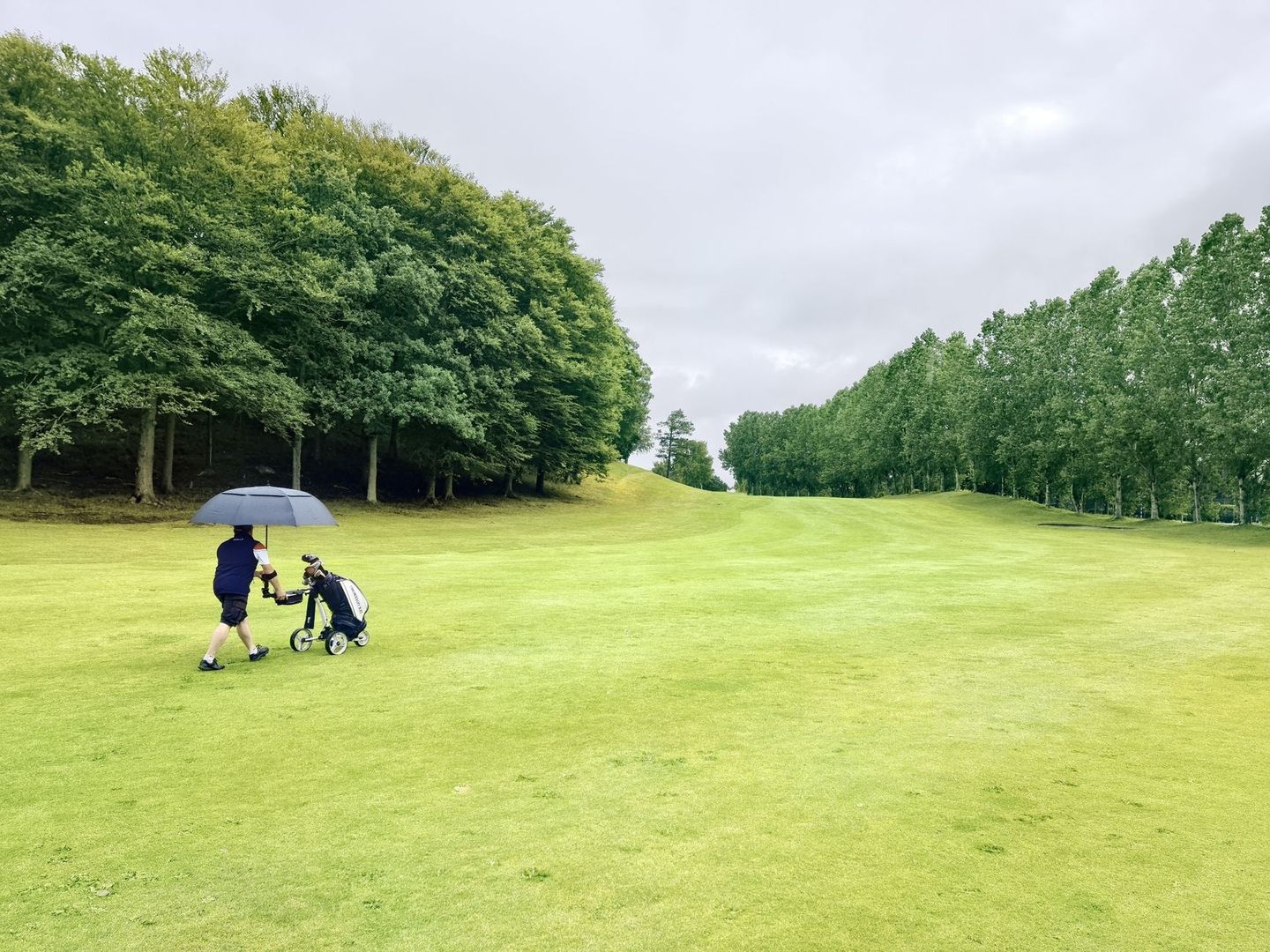
Open parkland holes have a character all their own. Mature trees may frame the fairway, but they do not always shelter it, and a fresh breeze can sweep across the landing area with very little warning. For club golfers, visitors, and society players, the challenge is rarely simply hitting the ball farther. It is judging how the air will affect launch, carry, curvature, and the quality of the next shot.
The natural reaction is often to fight the wind with speed. That usually produces the opposite result. A harder swing can add unwanted spin, disturb balance, and turn a manageable crosswind into a shot that finishes well outside the intended line. A more reliable approach is to flight the ball down. Taking one more club, softening grip pressure, and controlling the finish can reduce the wind”s influence without demanding an aggressive draw or fade. The aim is not to overpower the conditions, but to make a steady, repeatable swing that gives the breeze less opportunity to interfere.
The Science of Aerodynamics and Wind Drift
A golf ball launched high into a crosswind spends more time travelling through moving air. That extra flight time gives the wind longer to push the ball sideways, particularly when the ball has significant backspin. Backspin creates lift, helping the ball climb and remain airborne, which is useful when a shot must stop quickly, but it can also make the ball more sensitive to exposed conditions. High-spin iron shots may rise attractively and land softly, yet they can lose distance or drift more noticeably when the wind is working across the target line.
The ball”s spin axis also affects its movement. A shot with sidespin or a tilted spin axis is already curving, and the combination of curve, lift, and crosswind can magnify dispersion. This is commonly explained through the Magnus effect, in which a spinning object experiences a force that influences its flight path. A useful overview of the Magnus effect and spinning-ball aerodynamics helps explain why a small swing flaw can become more obvious in the air. Before choosing a target, assess whether the breeze is light enough to accept normal trajectory or strong enough to justify a lower, more penetrating flight.
Evaluating Real Breezes Across Exposed Parkland Terrain
Wind on a golf course is rarely uniform from tee to green. Tree lines can funnel air into a landing zone, while a gap between mature trees may create a sudden gust. The breeze felt beside the tee markers may not match the airflow above the fairway, and the direction at ground level can appear different from the movement near the flag. This is why a single glance at a windsock is not always enough for a confident decision.
Use several visual clues before committing to the shot. Watch the flagstick, the tops of the trees, and the rough or longer grass along the fairway edge. If the canopy is moving but the grass is still, the wind may be stronger aloft than at ball height. If ripples travel consistently through the rough, the ground-level breeze is likely more reliable. The Beaufort scale guide provides a useful reference for relating visible effects, such as moving branches and rough water, to broad wind-strength categories. It is not a replacement for local judgement, but it encourages a disciplined assessment rather than a guess based on one gust.
| Course clue | What it may indicate | Practical response |
|---|---|---|
| Flag fluttering steadily | A consistent breeze at or near the green | Allow for direction and consider one extra club |
| Tree tops moving sharply | Stronger air higher above the fairway | Expect a high shot to be affected more than a low one |
| Rough rippling in one direction | A readable ground-level crosswind | Choose a conservative target window on the safe side |
| Intermittent movement and sudden gusts | Variable airflow around trees or open gaps | Wait for a calmer moment and use a controlled swing |
Core Set-Up Adjustments for a Lower Launch
The simplest adjustment is club selection. For a normal iron yardage in a noticeable crosswind, consider taking one club more than the distance suggests. In a stronger or inconsistent breeze, two extra clubs may be appropriate, particularly when the shot must carry a hazard or reach an elevated green. The additional club allows a smoother swing, which is important because controlled effort generally produces a more predictable launch than trying to create extra speed against the wind.
Ball position can move slightly back from its normal location, usually by a small fraction of a ball position rather than a dramatic change. This encourages contact before the clubhead reaches its lowest point and can help produce a lower flight. Choking down approximately an inch on the handle also improves control and makes it easier to maintain balance. These adjustments should remain modest. Excessively moving the ball back or gripping far down the club can alter strike quality and create a shot that is low for the wrong reasons.
- Take one extra club for a moderate crosswind and consider two when the breeze is strong or inconsistent.
- Move the ball slightly back of the usual centre position.
- Choke down about an inch to improve control and shorten the effective swing length.
- Stand comfortably, maintain normal posture, and avoid narrowing the stance so much that balance suffers.
- Pick a target window that leaves room for the breeze, rather than aiming directly at the flag and hoping the wind behaves.
Mastering the Three-Quarter Finish and Soft Grip Pressure
The key to a controlled wind shot is not a forced punch. It is a balanced, abbreviated motion. Swinging harder often increases clubhead speed and can raise spin, especially when the strike becomes less centred. More spin and a higher launch give the wind additional influence, while tension in the hands can interrupt the club”s delivery. A light but secure grip helps the clubhead move through the ball without excessive manipulation.
Think of the finish as a three-quarter finish rather than a full, high release. This does not mean stopping the club suddenly or holding the face open. It means completing the motion with the hands and chest lower and more compact than on a standard shot. The follow-through remains purposeful, but the club does not wrap fully around the body. The result should feel like a smooth, controlled acceleration through impact, not a deceleration into the ball.
- Choose the club first. Select enough loft and distance to reach the target with a comfortable swing, then identify a landing area that gives the wind room to work.
- Set the ball slightly back of centre and grip down about an inch. Keep the stance stable and distribute pressure evenly enough to avoid falling toward the target or away from it.
- Take a compact backswing. A shorter motion makes it easier to preserve sequence and rhythm, particularly when the breeze is making the club feel unstable.
- Begin the downswing smoothly. Maintain soft grip pressure and resist the impulse to hit harder. The objective is clean contact with controlled speed.
- Finish at roughly three-quarter length. Allow the chest to turn through and the club to release naturally, but keep the finish compact and balanced.
- Hold the pose briefly and assess the strike. A solid, low flight is more valuable than a dramatic shot that climbs into the gusts.
There is also a valuable mental adjustment. Accept that a wind shot may look less impressive than a full iron, particularly when it leaves the clubface on a flatter trajectory. Judge it by the quality of its flight and the position it creates for the next stroke. On a parkland course, a ball that finishes safely on the correct side of the fairway or green is often a better result than one that flies directly at the flag before drifting into rough or trouble.
Step Up with Quiet Confidence on Windy Fairways
Successful wind play is built from three dependable decisions: take enough club, keep the hands soft, and control the finish. A slightly rearward ball position and a modest choke-down can support the lower launch, but the main improvement comes from avoiding unnecessary effort. The smoother swing usually creates a more stable strike, lower spin sensitivity, and a flight that remains easier to predict across an exposed landing area.
Next time the breeze crosses an open parkland hole, treat it as part of the course rather than an opponent to defeat. Read the trees, grass, flag, and available landing space; choose a conservative target; and commit to the controlled motion. A practice session on the range can make this strategy feel natural. Hit several clubs with a three-quarter finish, compare the height and carry, and learn how far each one travels when struck smoothly. With that preparation, even a gusty afternoon can become an opportunity to play with clarity, patience, and quiet confidence.

