
The Quiet Toll of the Final Three Holes
Every golfer knows the familiar shape of a promising round that begins to loosen on holes 16, 17 and 18. The swing may still feel broadly sound, yet the tee shot finds trouble, an overly ambitious approach brings a short-sided miss, or a putt is hurried after an avoidable lapse in concentration. For club golfers, regular walkers and competitive amateurs, these late-round blowouts are rarely caused by one dramatic technical failure. More often, they reflect a gradual loss of physical and mental reserve that has been building since the first tee.
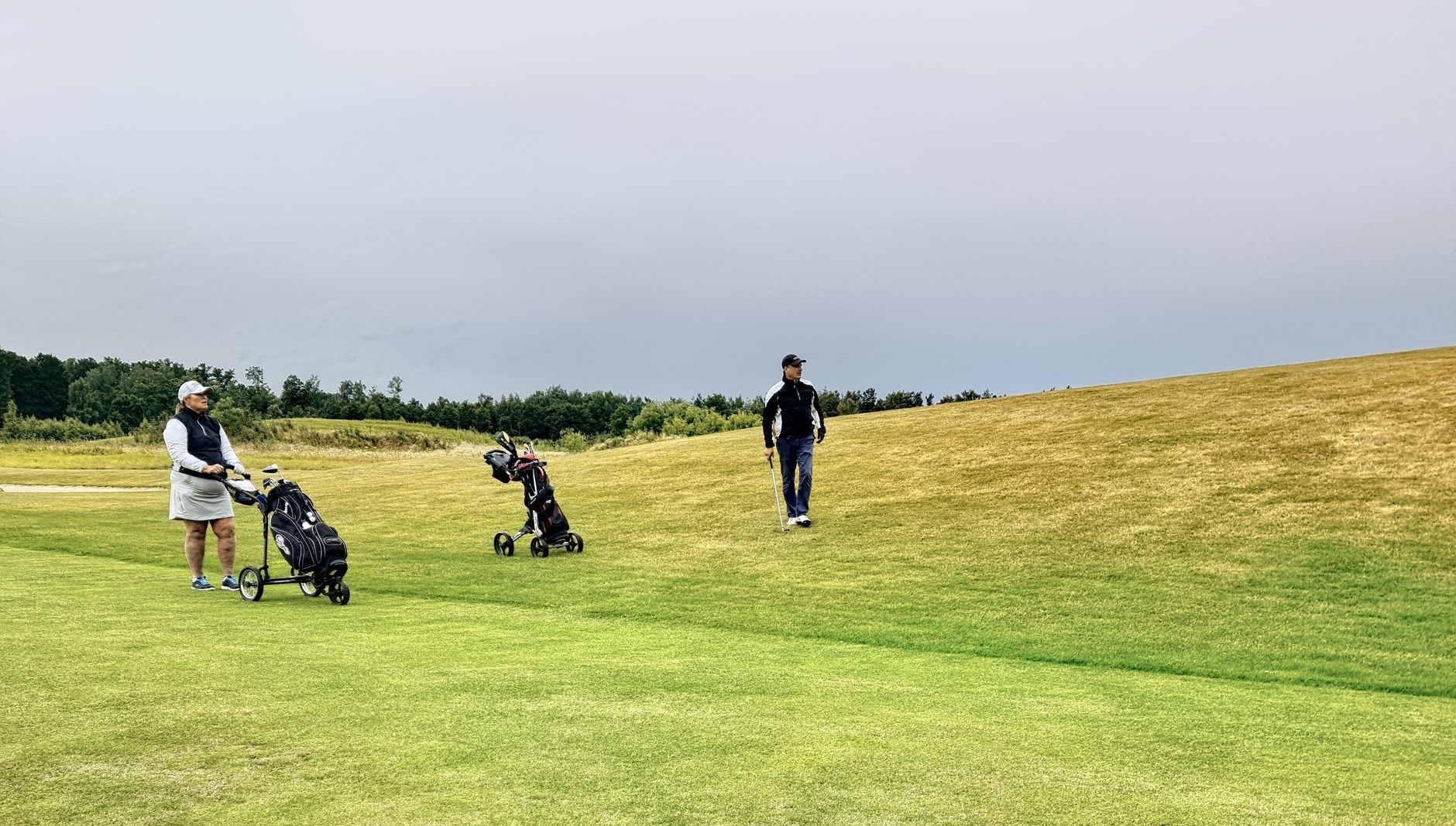
An 18-hole round commonly lasts four to four and a half hours, and walking the course may involve approximately four to five miles, depending on the layout, playing conditions and route between shots. Carrying or pushing equipment adds to that workload. The important point is that fatigue does not always announce itself with heavy breathing or obvious discomfort. Subtle tiredness in the calves, hips, trunk and shoulders can reduce stability, while depleted attention makes poor decisions feel reasonable. The aim is not to remove every demanding moment, but to arrive at the final tee with enough energy and clarity to choose the right shot.
Understanding the Hidden Physical Demands Across Eighteen Holes
Golf looks intermittent because each shot is separated by walking, waiting and preparation, but the body is working throughout the round. A player may walk undulating fairways, climb slopes, cross rough and repeatedly change direction while carrying a bag or managing a trolley. The swing itself is also a whole-body movement, involving more than eighty strokes for many rounds once practice swings, chips and putts are included. Even when each individual action feels manageable, the combined demand is substantial.
Walking and riding create different physical profiles. Walking provides moderate-intensity activity and places a steady load on the legs, feet and postural muscles. Riding can conserve energy, which may be particularly useful in heat, on difficult terrain, or for anyone managing an injury or mobility limitation. A cart does not automatically produce a faster or better round, however. Preparation, shot location, group habits and course rules still influence pace. The most suitable option is the one that supports comfort, safety, concentration and a consistent finish.
The decline in physical control is often gradual enough to escape notice. Small stabilising muscles around the ankle, knee, hip and trunk may tire before the larger muscles feel weak. That can affect balance during the backswing, pressure transfer through impact and the ability to hold posture over a long putt. Courses that demand repeated elevation changes can magnify the effect. Health and fitness education, including the broad wellness and exercise perspective represented by the College of Health Professions, helps illustrate why a seemingly modest activity becomes physiologically meaningful when repeated for several hours.
- Walking load: approximately four to five miles is common, although distance varies with course design, shot accuracy and route choices.
- Equipment load: carrying a bag adds continuous weight, while pushing a trolley changes rather than eliminates the effort.
- Swing repetition: full swings, recovery shots, chips, pitches and putts create repeated demands on the legs, trunk and shoulders.
- Terrain exposure: slopes, soft ground, heat and long transitions can increase energy use without changing the scorecard.
Why Decision Quality Declines When Legs Grow Tired
Physical fatigue and decision-making are closely connected. When the body must work harder to maintain posture and movement, the brain has fewer comfortable reserves for evaluating risk, selecting a target and committing to a shot. This does not mean that a tired golfer suddenly loses all skill. Instead, the margin for disciplined thinking becomes narrower. The player may process less information, rush the routine or rely on the first appealing option rather than the most appropriate one.
Early-round mistakes are often recognisable as ordinary execution errors. A slightly loose drive, an imperfect distance judgment or a missed putt may occur while the player still has plenty of time and energy to reset. On the home stretch, fatigue can change the nature of the mistake. A forced carry may be attempted without sufficient allowance for the day”s strike pattern, a club may be chosen for an optimistic distance rather than a reliable one, or a difficult pin may attract attention even when the safer side offers the best scoring chance.
Clinical and sports-physiology research continues to examine how neuromuscular exhaustion influences cognitive and motor performance under pressure. A recent investigation available through sports physiology research provides useful context for understanding why physical strain can affect choices as well as movement. For golfers, the practical lesson is straightforward: tiredness can encourage impulsive course management, especially when the player is trying to protect a score or recover from a previous hole.
| Round stage | Common physical state | Typical decision risk |
|---|---|---|
| Front nine | Fresh legs and stable posture | Technical errors, overconfidence or early tactical impatience |
| Middle holes | Accumulating walking and swing load | Reduced routine quality, rushed preparation and inconsistent tempo |
| Final three holes | Tired stabilising muscles and lower cognitive reserve | Forced carries, heroic recovery attempts and poor club selection |
The strongest response is not to become more aggressive in an attempt to finish quickly. It is to reduce unnecessary choices. Select a dependable target, commit to a realistic club and accept that a conservative line may protect the round better than a low-percentage recovery. A clear plan is especially valuable when fatigue makes every option appear equally urgent.
On-Course Hydration and Fuelling to Protect Executive Focus
Hydration should begin on the practice tee, not when thirst becomes obvious on the 12th or 13th hole. Water needs vary with temperature, wind, clothing, body size and sweat rate, so a rigid quantity is not appropriate for every golfer. Regular small drinks are generally easier to manage than waiting and consuming a large amount at once. In warm conditions or during a particularly demanding walk, an appropriate electrolyte drink may help replace some minerals lost through sweating, although it should complement rather than replace sensible water intake.
Fuelling works best as a planned part of the round. Waiting until energy has already fallen can leave too little time to restore concentration before a demanding stretch. Small, familiar snacks taken at regular intervals can provide a steadier supply of energy than one large food break. A golfer should test choices during casual rounds rather than introducing unfamiliar products during a competition.
- Drink modest amounts regularly from the practice tee onward.
- Take a small snack roughly every three holes if the round and personal tolerance require it.
- Choose practical foods such as fruit, a simple sandwich, yoghurt, nuts or a familiar carbohydrate-based snack.
- Watch for early signs including dry mouth, headache, unusual irritability, sluggish walking, difficulty concentrating or a sudden loss of routine.
- Adjust for heat, elevation, pace of play and individual medical needs, and seek professional advice when a health condition affects hydration or nutrition.
Fuelling is not a performance trick reserved for elite players. It is basic preparation for any golfer who wants executive focus to survive the final holes. The objective is to avoid a sharp valley in energy that makes a reasonable plan feel burdensome. If concentration begins to fade, the next tee is a useful point to drink, take a small snack and deliberately rebuild the routine before addressing the shot.
A Simple Routine for Preserving Posture and Pacing Down the Stretch
A reliable late-round routine should be short enough to use on every critical hole. Before a tee shot or approach, step away from the ball and allow the body to reset. Stand tall, let the shoulders drop, loosen the hands and take one controlled breath. Then feel balanced pressure through both feet, with the knees relaxed rather than locked. This does not repair every technical fault, but it restores awareness of the posture and balance that fatigue can quietly erode.
- Pause behind the ball: Confirm the target, wind and intended start line before walking into the address position.
- Reset the frame: Lengthen the spine, release the shoulders and check that the grip is not tightening in response to tiredness or pressure.
- Settle the feet: Establish stable, even pressure and avoid rushing the final alignment.
- Choose the high-percentage option: Select the club and target that match the day”s reliable strike, not an idealised version of it.
- Commit and swing: Once the decision is made, allow the normal pre-shot rhythm to take over without adding last-second corrections.
Pacing between greens and teeing grounds deserves equal attention. Walking faster may feel like a way to get the round finished, but it can increase breathing rate, tension and mental hurry just when a demanding shot requires calm. A deliberate, sustainable pace preserves energy and creates a useful transition between holes. If riding, use the time saved by the vehicle to prepare rather than to become distracted. If walking, keep equipment organised so that unnecessary stops and detours do not add to the load.
Before a decisive shot, use a simple mental filter. Ask what the safe target is, what miss is acceptable, which club produces the largest margin and whether the decision would still make sense without the score in mind. That final question helps expose tired impulses. A golfer who has just made a mistake may want immediate compensation, while a golfer protecting a score may become excessively cautious. Neither reaction is automatically wrong, but both deserve examination before the club is selected.
Protecting Your Card All the Way to the Clubhouse
Late-round struggles are often physiological expenditures showing up in the score rather than sudden technical collapse. Four or five miles of walking, repeated swings, changing terrain, equipment weight and hours of concentration can gradually reduce stability and decision quality. Recognising that pattern removes some of the mystery from holes 16 through 18. It also gives the golfer practical levers to pull before the damage appears.
Begin hydration early, use structured small snacks, regulate walking speed and perform a brief posture reset before important shots. Keep the final decisions simple, favour realistic targets and treat the last three holes as a preparation challenge rather than a test of willpower. With those habits in place, stepping onto the 16th tee can feel less like a survival exercise and more like the final, well-managed stretch of the round, with the body supported, the mind clear and the card still firmly in hand.

